Tomato Introduction
Tomato Plant Characteristics
- The tomato is a warm season vegetable crop that is sensitive to frost and is killed by freezing temperatures
- Tomatoes do not set fruit when night temperatures are consistently below 50°F and will not develop properly when temperatures exceed 95°F
- Tomatoes can have either a determinate or indeterminate growth habit
- Determinate vines reach heights of 3-4′, and harvest is concentrated
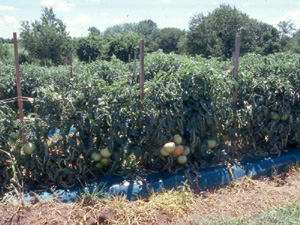
- Indeterminate vines continue to produce additional vines and flower clusters throughout the growing season; they reach 5-7′ in height and harvest, once begun, will continue until frost
- Tomato plants do not need a specific day length in order to flower
- Flowers are self pollinating, but facilitated pollination by mechanical shaking, wind, or insects will result in optimal pollination
- For most tomato cultivars, the period between flowering and harvest is approximately 45 days
Tomatoes in High Tunnels
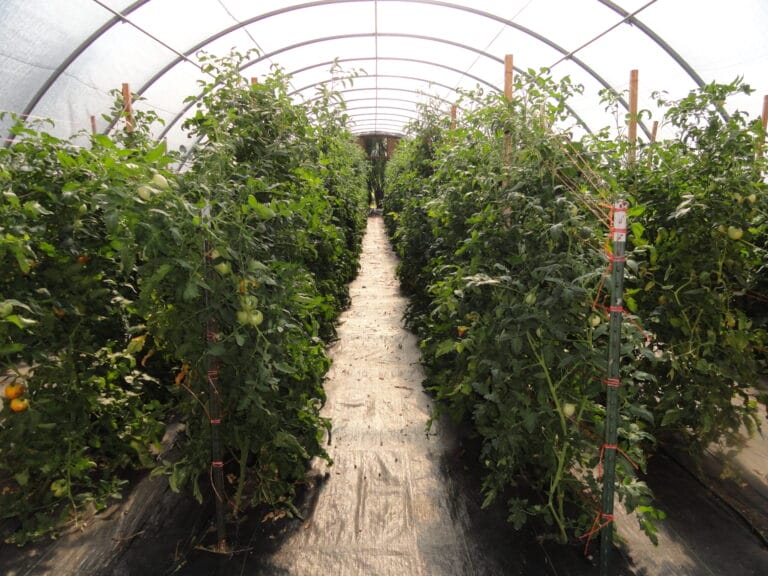
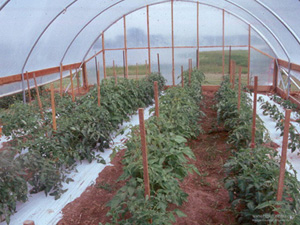
- Although many vegetable crops can be grown successfully in high tunnels, tomatoes are particularly well adapted to this type of culture because they can be trained to grow vertically
- High tunnels offer a level of protection from damaging winds and injuring frosts that enhance early maturity, and produce a better-quality product
- Reduced wind-abrasion injuries result in fewer points of entry for insect and disease
- Protection by the structure reduces evapotranspiration from plants and soil
- High tunnel production is a middle ground between tomato plants grown in the open field and tomato production in greenhouses
Economic Importance/Marketing
- Earliness and season extension are primary advantages of producing tomatoes in high tunnels over field production
- Early season tomatoes reward growers with premium prices since it is difficult to consistently harvest field tomatoes before July in the Central Great Plains
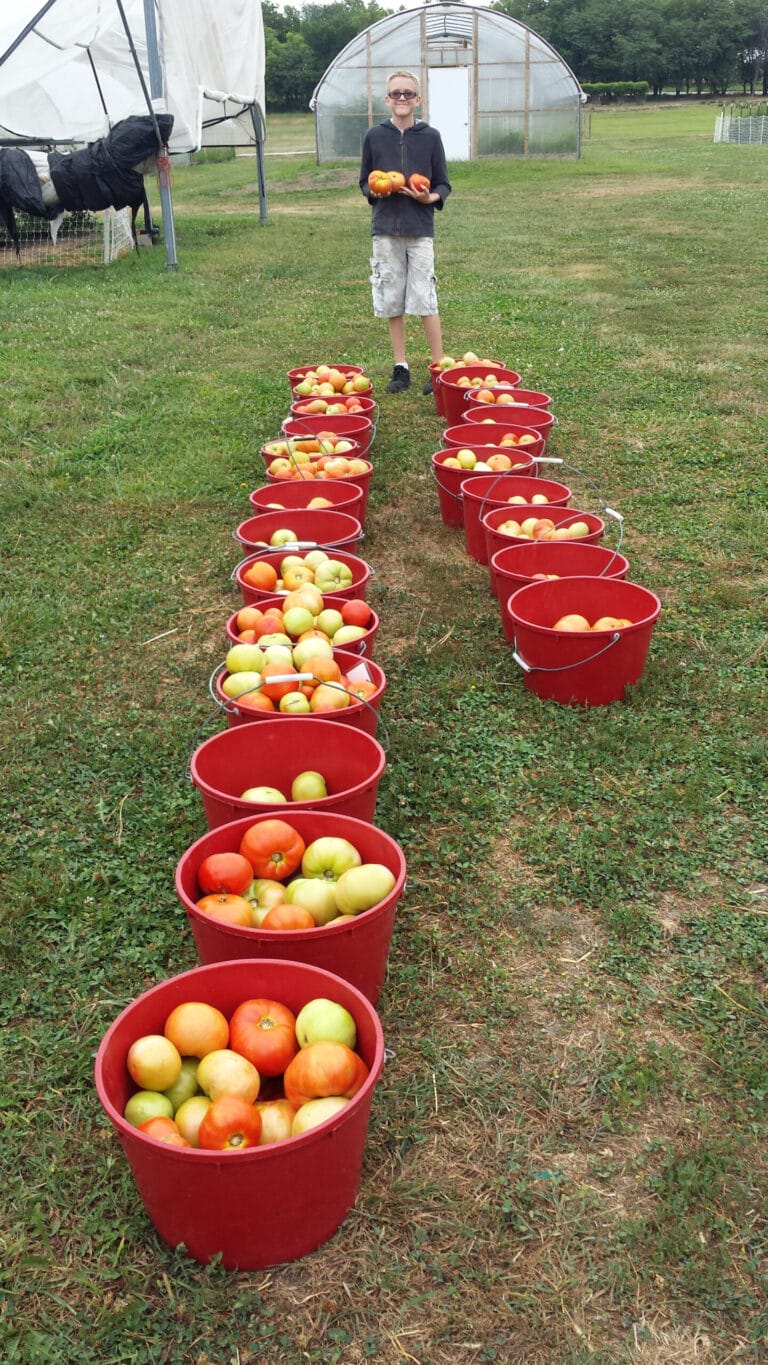
- Tomatoes grown in high tunnels can typically be harvested 3 to 4 weeks earlier than from field planting.
- Earlier harvest is due to a combination of planting earlier, and faster maturity compared to field grown tomatoes; increased soil temperatures hastens root growth which contributes to an earlier harvest
- Late season tomatoes can be harvested an additional 3 weeks in the fall
- While late season tomatoes do not command the premium price of early season tomatoes, the additional harvest period does contribute to increased income for the grower