Plant Tissue Analysis

Description
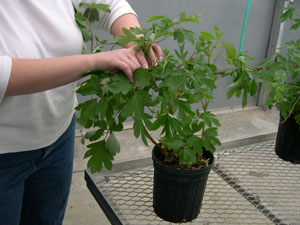
A plant tissue analysis offers a snapshot of the plant’s tissue nutrient content at the time of sampling. An early analysis allows for deficiencies and toxicities to be detected, and proper corrective actions to be implemented before permanent physiological damage occurs. Unless otherwise specified, the youngest fully-expanded lead should be sampled. Maria decides to send in a sample of youngest, fully-expanded leaves collected from several plants exhibiting symptomology.
Results
| Marconutrients (%) | Test Result | Acceptable Rangesz |
| N | 4.01 | 3.71-5.24 |
| P | 0.66 | 0.60-0.70 |
| K | 3.20 | 2.24-3.18 |
| Ca | 0.58 | 0.38-0.64 |
| Mg | 0.44 | 0.19-0.35 |
| S | 0.66 | 0.66-0.69 |
| Micronutrients (ppm) |
||
| Fe | 74 | 74-79 |
| Mn | 931 | 891-1504 |
| B | 20 | 20-24 |
| Cu | 6 | 4-6 |
| Zn | 103 | 87-101 |
| Mo | 0.89 | 0.66-1.08 |
| Nonessential Elements (ppm) |
||
| Na | 55 | 42-60 |
| Al | 64 | 23-210 |
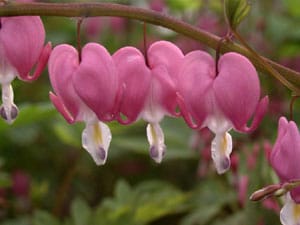
zSurvey range for Dicentra eximia, fringed bleeding heart, reported in; Mills, H.A. and J.B. Jones. 1996. Plant Analysis Handbook II. MicroMacro Publishing, Inc., Atherns, GA.