Similar Posts
Dealing with High Soluble Salt Levels in High Tunnels
Some growers have expressed concern about soil test analysis revealing abnormally high soluble salt levels in the soils of their high tunnels. We have seen soluble salt levels increase in the high tunnels at Penn State’s High Tunnel Research and Education Facility, regardless of whether inorganic or organic nutrient sources have been used. In the…
Using Organic Nutrient Sources
When using organic nutrient sources—for example, compost, manure, green manures, meals, and so forth—recommendations for crop nutrient needs will need to be translated. Soil test reports do not give specific recommendations for using organic fertilizers/amendments. This is because the percentage and availability of plant nutrients in such materials is highly variable and usually depends on…
Water, Soil and Fertility Management in Organic High Tunnels
Introduction/Summary: Regenerative and sustainable soil and water management for intensive crop production in protected cultivation is a key to farm profitability and crop quality. The integrated management of physical, chemical and biological components of soil can minimize the need for off farm resources and interventions with potentially toxic chemicals or pesticides. A comprehensive plan can…
Soil Management in High Tunnels
The 2010 Farmer to Farmer Conference at Point Lookout in Northport, Maine, featured a session on managing soils in high tunnels. Speakers were Vern Grubinger, University of Vermont vegetable and berry specialist; Bruce Hoskins of the University of Maine Diagnostic Lab; and Paul Volckhausen, who, with his wife Karen, grows organic tomatoes and other crops…
Organic High Tunnel Fertility Research
The following powerpoint was presented by University of Minnesota Extension professor, Terry Nennich at the 2009 Minnesota Statewide High Tunnel Conference in Alexandria, MN on Dec. 2-3, 2009. Organic High Tunnel Fertility Research from University of Minnesota-Horticulture
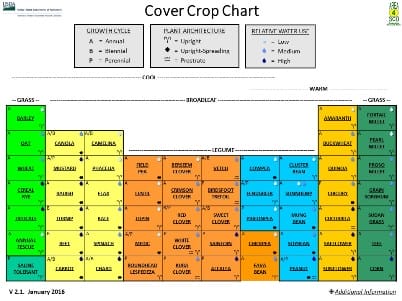
USDA Cover Crop Chart
CLICK HERE TO DOWNLOAD COVER CROP CHART The Cover Crop Chart (v. 2.1) is designed to assist producers with decisions on the use of cover crops in crop and forage production systems. The chart, patterned after the periodic table of elements, includes information on 58 crop species that may be planted individually or in cocktail…